Modern fleets generate large volumes of operational data from vehicle controllers, cameras, positioning systems, sensors, and wireless networks. Processing this information quickly helps operators monitor vehicle status, identify abnormal conditions, and improve dispatch decisions. However, reliable fleet intelligence depends on more than connectivity. The onboard computer must balance processing performance, power management, interface compatibility, and environmental durability to support continuous operation.
Why Onboard Computing Matters for Fleet Operations
Traditional vehicle electronics often handle individual functions through separate control units. As fleets adopt video analytics, advanced telematics, and connected vehicle applications, the need for integrated computing increases. A centralized edge platform can collect information from multiple sources, process selected data locally, and forward relevant results to fleet management software.
A suitable vehicle embedded PC helps integrate these functions without sending every raw data stream to a remote server. Local processing can support faster responses to operational events and reduce unnecessary network traffic. System designers must still define which decisions require immediate onboard action and which reports can be transmitted periodically.
Process Time-Sensitive Data at the Edge
Real-time fleet applications have different processing requirements. Vehicle tracking may need positioning updates and basic status calculations, while onboard video analytics can involve multiple high-resolution streams. Battery monitoring, equipment diagnostics, and driver assistance may also require timely data collection from different interfaces.
Sending all information to cloud introduces dependence on network coverage, bandwidth, and remote service availability. Edge computing allows suitable workloads to run inside the vehicle, even when connectivity becomes intermittent. The system can evaluate incoming data, generate alerts, and store important records locally before synchronizing them when a connection is available.
This approach does not eliminate cloud infrastructure. Instead, it divides workloads according to latency, bandwidth, and operational priorities. Fleet architects should establish data-retention policies, event priorities, and recovery behavior before deployment. These decisions help prevent unnecessary transmission while preserving information needed for maintenance and performance analysis.
Connect Vehicle Electronics and Peripheral Devices
A fleet computer must work with the hardware already installed in each vehicle. Common integration requirements include communication with electronic control units, cameras, GNSS receivers, diagnostic equipment, displays, and external sensors. Interface availability and protocol support should therefore be evaluated during the system design stage.
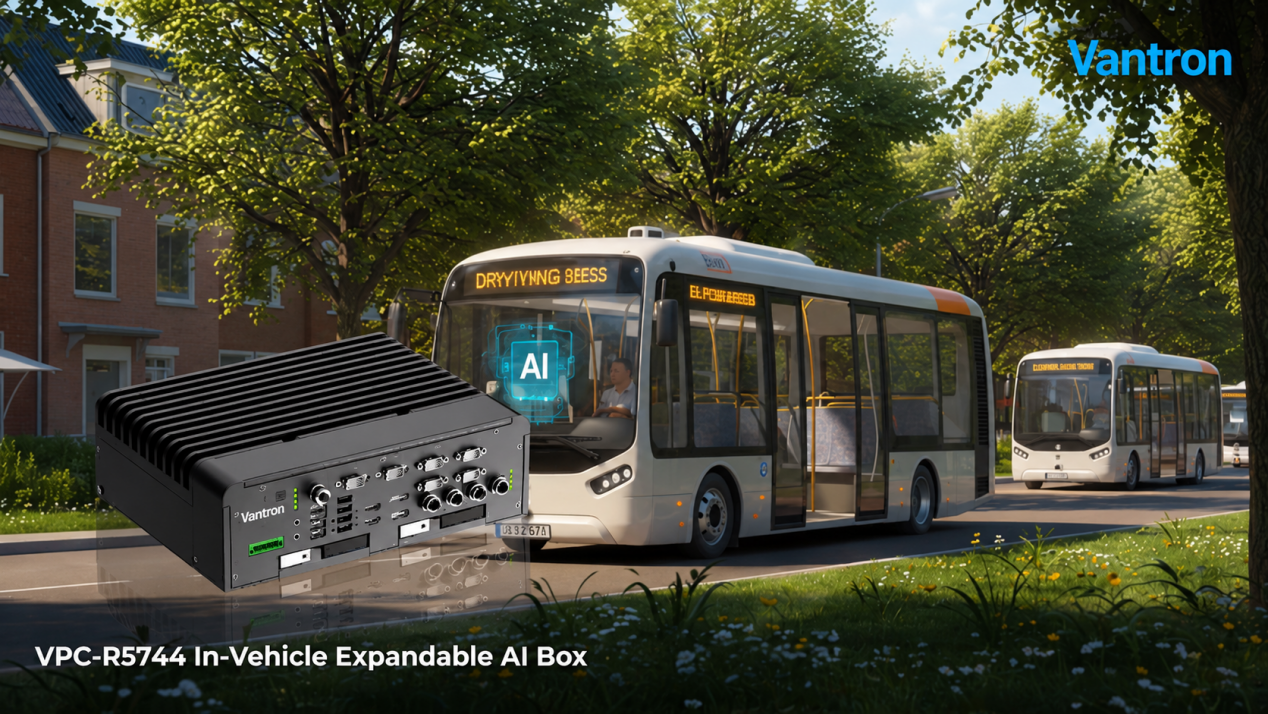
The VPC-R5744 Expandable In-Vehicle AI Box PC supports isolated CAN interfaces, isolated RS232/485/422 serial ports, digital inputs and outputs, USB connections, and Ethernet networking. These options support integration with compatible vehicle systems and peripherals. Its four 2.5GbE ports support PoE+, allowing compatible cameras to receive power and transfer data through the same connection.
For integrators, the next step is to verify protocol requirements, electrical characteristics, connector types, and driver compatibility. Multiple high-bandwidth data sources should also be tested simultaneously. A connection that works during an isolated bench test may behave differently when the computer handles video acquisition, analytics, and vehicle communication together.
Choose Computing Capacity for the Actual Workload
Processor selection should reflect the applications running onboard. A system handling basic telemetry may need modest resources, while multi-camera analytics and complex diagnostic algorithms demand more memory and sustained processing performance. Selecting excessive computing capacity can increase cost and power consumption without delivering meaningful operational benefits.
The VPC-R5744 supports 12th, 13th, and 14th Gen Intel® Core™ desktop processors and up to 96GB of DDR5 memory. It also provides two front-access 2.5-inch drive bays, with software RAID 0/1 support for compatible storage configurations. These options give engineering teams flexibility when balancing application performance, data retention, and service requirements.
Vantron’s platform supports Windows 10/11 IoT, with Linux available upon request. Before procurement, teams should test their intended analytics software, camera SDKs, database services, and hardware drivers on the selected configuration. Measuring performance against representative workloads provides a more useful basis for selection than comparing specifications in isolation.
Manage Vehicle Power and Environmental Conditions
Vehicle computing introduces power and environmental challenges that conventional office systems rarely encounter. Supply voltage may fluctuate during engine startup, vehicles may experience frequent ignition cycles, and equipment can be exposed to significant temperature changes. An unsuitable power design may cause unexpected resets or interrupt data collection.
The VPC-R5744 supports a 9V–60V DC input range and 16-mode software ignition control. Its finless design reduces reliance on moving cooling components. The listed operating temperature range is -40°C to 70°C with 35W TDP CPUs, or -40°C to 55°C with 65W TDP CPUs. Its IP50-rated enclosure provides a defined level of protection but should not be treated as waterproof.
Deployment teams should confirm the expected electrical conditions, mounting arrangement, airflow, and thermal load. They should also test startup, control shutdown, and recovery after power interruption. These checks help ensure the computer can continue performing its assigned tasks throughout normal vehicle operation.
Turn Processed Data into Fleet Insights
Collecting information only creates value when the resulting data supports useful decisions. Fleet platforms can combine vehicle status, location, diagnostic events, and selected video records to identify recurring faults or operational inefficiencies. Processing relevant information onboard can also reduce the volume of raw data transmitted over cellular networks.
For organizations planning compute fleet management solutions, the onboard computer should fit into a wider data architecture. Engineers need to define how records are timestamped, buffered, transmitted, and reconciled after a network outage. Consistent data formats and clear event priorities make it easier for central systems to compare vehicles and identify exceptions.
Remote maintenance capabilities also deserve attention. The VPC-R5744 supports Intel® AMT, Wake-on-LAN, PXE boot, hardware monitoring, and a watchdog timer. Actual remote-service functions depend on network access, configuration, and security controls. Role-based access, software update validation, and secure communications should be included in the deployment plan.
Build a Maintainable Fleet Computing Architecture
Fleet buyers should evaluate documentation, driver availability, technical support, and product lifecycle alongside hardware specifications. Pilot testing should cover peak data loads, power interruptions, network outages, and recovery procedures before fleet-wide deployment.
Vantron offers the VPC-R5744 Expandable In-Vehicle AI Box PC for vehicle applications requiring reliable onboard processing and flexible connectivity. Matching its capabilities to operational requirements helps fleet operators improve data processing while managing integration and maintenance costs.
