When planning a new injection molded product, one practical question often comes before the tooling order: how many parts can rapid prototype tooling actually produce? The answer is not a single fixed number. Tool life depends on the mold material, plastic resin, part geometry, mold structure, surface treatment, maintenance, and expected production conditions.
For product teams moving from design validation toward pilot production, understanding these factors can help avoid paying for production tooling too early or selecting a prototype mold that cannot support the required quantity. HordRT approaches rapid prototype tooling by matching the tooling strategy to the actual testing and production requirements.
Tool Material Sets the Starting Point for Tool Life
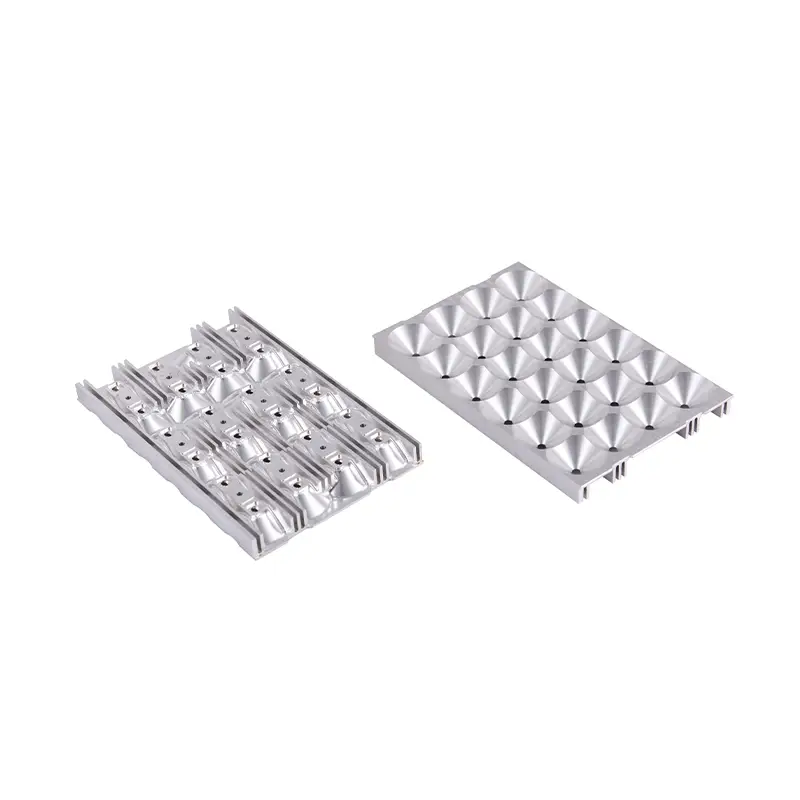
The mold material has a direct influence on how many shots a rapid prototype tool can withstand. Aluminum tooling is often selected when speed and economical validation are priorities. HordRT uses hard aluminum 7075 for rapid prototype tooling, with a typical tooling life of approximately 500 to 5,000 shots, depending on application and operating conditions.
This range can be suitable for design verification, functional testing, customer samples, and limited pilot production. It also allows manufacturers to obtain injection molded parts using production-grade plastics without immediately committing to a long-life production mold.
For projects requiring more cycles, soft steel tooling provides greater durability. HordRT also offers soft steel prototype tooling for applications involving higher quantities, tighter tolerances, or more demanding materials.
The important point is that tooling material should be selected according to the expected number of parts rather than simply choosing the lowest initial tooling cost.
Part Geometry Can Change the Practical Tool Life
Tool life is also influenced by the design of the molded part. A simple enclosure with straightforward ejection and moderate wall thickness generally places different demands on a mold than a complex component containing deep ribs, sliders, tight tolerances, textured surfaces, or multiple side actions.
Complex geometry can increase mechanical wear and make cooling, ejection, and mold maintenance more demanding. The choice of tooling structure therefore needs to consider more than the estimated number of parts.
This is where design for manufacturability becomes valuable. HordRT reviews elements such as parting lines, gate locations, ejector positions, wall thickness, tolerances, surface finish, potential sink marks, gate marks, and warpage during DFM analysis.
Addressing these factors before machining can reduce avoidable tooling modifications and improve the reliability of the molding process.
The Plastic Resin Also Matters
Not every plastic creates the same level of wear on tooling. Standard engineering thermoplastics may place relatively moderate demands on a prototype mold, while abrasive or glass-filled materials can increase wear on cavity surfaces, gates, runners, and other components.
Material selection should therefore be discussed alongside tooling life. HordRT supports rapid prototype tooling with production-grade materials including ABS, PC, PC/ABS, PP, POM, PA, PMMA, TPU, PBT, and selected glass-filled materials.
Using the intended production material is particularly useful when the prototype needs to provide meaningful information about dimensional stability, strength, assembly, surface appearance, or functional performance. A prototype produced from a different material may not provide the same engineering feedback.
How Many Parts Should a Prototype Mold Produce?
The required quantity depends on the purpose of the project. If the objective is simply to check fit, appearance, and basic function, several hundred parts may be sufficient. If the project involves repeated engineering validation, customer testing, certification samples, or early market evaluation, the required quantity may move into the thousands.
This is why asking only, “How long will the mold last?” is not enough. A more useful question is, “How many acceptable parts do I need throughout the entire validation cycle?”
For example, a project requiring 800 functional samples has very different tooling requirements from one expecting 10,000 pilot parts. The latter may justify soft steel rapid prototype tooling or a bridge tooling strategy rather than a basic aluminum prototype mold.
HordRT offers aluminum tooling, soft steel tooling, shared MUD mold inserts, and single or multi-cavity configurations to accommodate different production requirements.
When Rapid Prototype Tooling Becomes Bridge Production
Rapid prototype tooling is not limited to laboratory prototypes. It can also support pilot production and bridge production while a final production mold is being prepared.
This can be useful when a product has passed initial design verification but demand is not yet high enough to justify full production tooling. Limited quantities can be manufactured for customer trials, certification, market testing, or an initial product launch.
The decision becomes particularly important when product demand is still uncertain. Instead of making a high upfront tooling investment before the design and market response are fully validated, a suitable rapid prototype mold can provide production-representative parts while keeping the initial commitment under control.
Why HordRT Takes a Volume-Based Approach
HordRT does not treat rapid prototype tooling as a one-size-fits-all process. Tooling material, structure, cavity configuration, part geometry, resin, and expected quantity are considered together before manufacturing.
Its rapid tooling process includes DFM analysis, CNC machining, EDM, wire cutting, mold fitting, trial molding, and quality inspection. HordRT also reports rapid tooling lead times of around 5 to 10 days and provides CMM dimensional inspection, 3D blue-light scanning, and T1 sample validation as part of its manufacturing capabilities.
Another advantage is the connection between tooling and molding. HordRT manages mold manufacturing, mold trials, inspection, and injection molding within a coordinated manufacturing workflow. This can simplify communication when engineering changes arise during validation.
For projects that may later transition from prototypes to regular production, this integrated approach can also make it easier to evaluate whether the existing tooling strategy remains appropriate as volumes increase.
Choose Tool Life Around Your Development Plan
The right rapid prototype tooling solution is determined by the complete project plan, not simply by the maximum number of shots advertised for a mold.
A few hundred parts may be enough for early design validation, while several thousand may require a more durable tooling material or different cavity configuration. If expected demand continues to grow, production tooling can eventually provide a longer service life and more stable output.
The practical goal is to select tooling that can cover the required validation and production window without unnecessary investment. With its range of prototype tooling options, engineering review, rapid manufacturing capabilities, and integrated molding services, HordRT helps connect prototype development with the next stage of production.
For a project involving rapid prototype tooling, providing the CAD files, resin specification, expected quantity, part requirements, and intended application gives the tooling team the information needed to recommend an appropriate mold structure and material.
