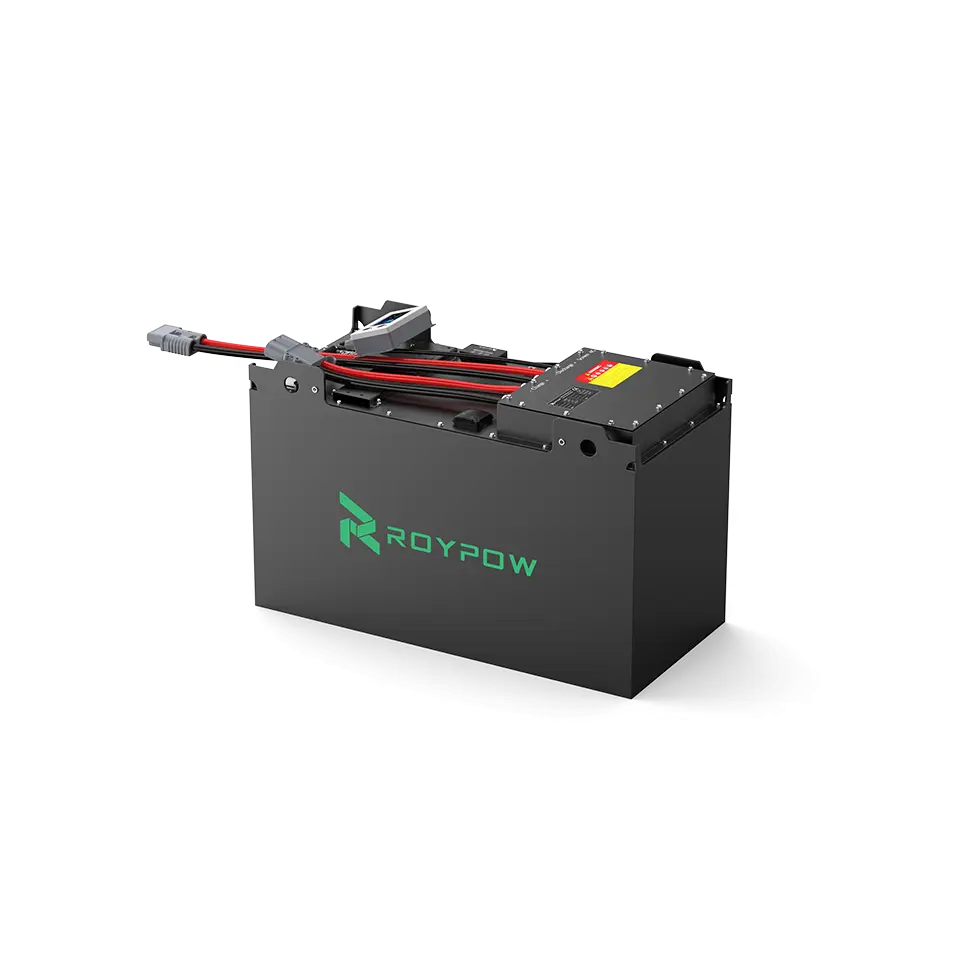
Forklift batteries from ROYPOW, which is dedicated to quality and innovation, give companies strong and dependable energy solutions that promote secure working conditions. By incorporating state-of-the-art technology into their lithium battery systems for forklifts, ROYPOW has raised the bar for industrial safety.
Enhanced Safety Features of ROYPOW Lithium Forklift Batteries
One of the primary ways ROYPOW’s lithium forklift batteries contribute to workplace safety is through their robust design and built-in safety features. Unlike traditional lead-acid batteries, which can pose risks due to acid spills and maintenance issues, ROYPOW’s lithium forklift batteries are sealed units that eliminate hazardous leaks. Additionally, these batteries come equipped with advanced thermal and chemical stability, reducing the risk of overheating and fire hazards.
Furthermore, each ROYPOW forklift lithium battery includes multiple protection mechanisms, such as overcharge, over-discharge, and short-circuit protection. These features ensure that the batteries operate safely under varying conditions, significantly lowering the risk of accidents in the workplace.
Simplified Maintenance and Reduced Risks
Another significant safety advantage of ROYPOW’s batteries for forklifts is the reduced need for maintenance compared to conventional battery types. Traditional lead-acid batteries require regular watering and monitoring, which can create potential safety hazards for employees. In contrast, ROYPOW’s lithium forklift batteries require little to no maintenance, allowing operators to focus on productivity without the added concern of battery upkeep. This reduction in maintenance not only enhances workplace safety but also streamlines operations, improving overall efficiency.
Conclusion
In conclusion, ROYPOW’s lithium forklift batteries play a crucial role in promoting workplace safety across various industrial settings. With their advanced safety features and lower maintenance requirements, these batteries for forklifts offer a reliable energy solution that minimizes risks associated with traditional battery systems. Investing in ROYPOW lithium forklift batteries ultimately contributes to creating a safer and more productive work environment for all employees.