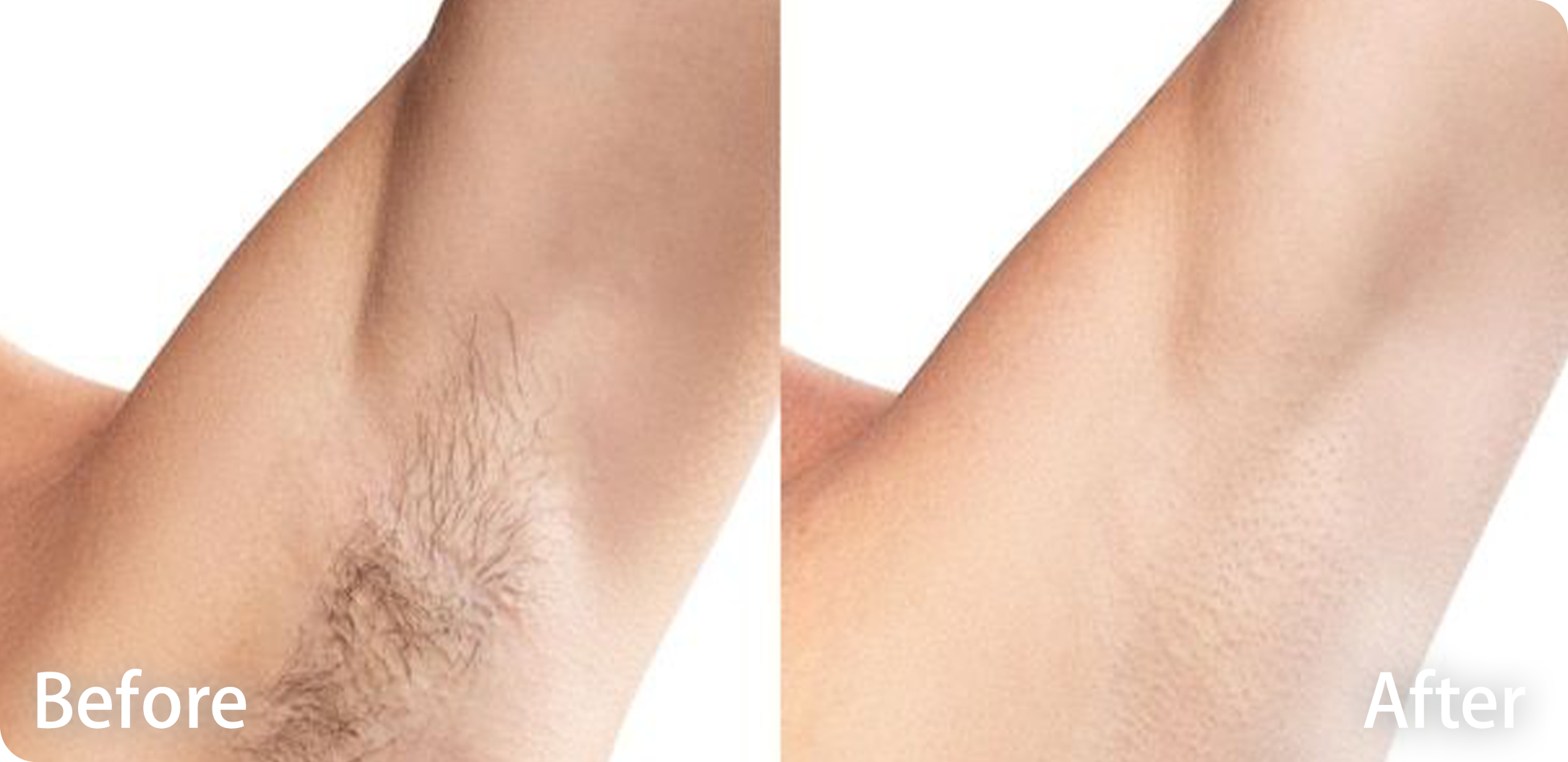
Skin tone, hair density, follicle depth, and treatment area all influence how light-based hair reduction should be approached. Laser hair removal treatment works through selective absorption of light by melanin in the hair, with energy converted into heat around the follicle. Since the amount of pigment differs between hair and surrounding skin, suitable wavelength selection and carefully adjusted parameters matter greatly.
Cooling, pulse duration, spot size, and treatment speed also affect the practical experience. Against this background, ENZOEYS SuperTouch S500 offers an example of how several treatment variables can be combined within one professional device without making the procedure dependent on a single fixed setting.
Skin Tone And Hair Color
Dark, coarse hair generally contains more melanin and can absorb laser energy more readily than very fine or lightly pigmented hair. Blonde, gray, and white hair may respond differently because they contain less of the pigment that absorbs commonly used laser wavelengths. Hair thickness should be considered alongside color rather than treated as an isolated factor.
Skin tone creates another important consideration because the surrounding skin also contains melanin. Greater pigment in the skin can narrow the margin between energy absorbed by the follicle and energy absorbed by the epidermis. Appropriate wavelength selection, pulse control, and cooling can help professionals adapt treatment parameters to individual characteristics.
Different wavelengths interact with tissue at different depths and with different absorption patterns. This makes wavelength selection relevant not only to skin tone but also to hair structure and treatment area. Laser hair removal treatment becomes more individualized when these variables are assessed together instead of relying on one preset approach.
Matching Wavelengths To Treatment Needs
The 755 nm wavelength is commonly associated with strong melanin absorption, making it relevant to certain hair and skin combinations. Longer wavelengths such as 1064 nm generally penetrate more deeply and interact differently with melanin. The 808 nm range sits between these options and is widely used for professional hair-reduction procedures.
Multiple wavelengths can provide greater flexibility across different clients and body areas. Facial hair may require different considerations from leg hair, while coarse underarm hair can behave differently from fine hair on the arms. Treatment planning should reflect these biological differences rather than applying identical settings throughout the body. For clinics, the value of multiple wavelength and spot-size options lies in this flexibility rather than simply in having more specifications on a product sheet.
Published specifications for the SuperTouch S500 list 755, 808, and 1064 nm wavelengths alongside four spot options, ranging from a 6 mm spot to 12×36 mm. Its 1500W diode platform also incorporates a waveguide-free handpiece with cooling. Such features illustrate how wavelength and treatment-area flexibility can be combined without turning every appointment into the same preset routine.
Spot Size And Treatment Coverage
Spot size influences both coverage and precision. Smaller spots can be useful around compact or contoured areas, while larger treatment fields can reduce the number of individual placements required across broad surfaces. The appropriate size depends on anatomy, hair distribution, and the working method used by the practitioner.
Treatment speed is affected by more than spot dimensions. Pulse frequency, energy delivery, cooling, and the operator’s movement across the treatment area all contribute to the pace of an appointment. Excessive speed without suitable parameter control can compromise consistency, while unnecessarily slow treatment may make large areas less practical.
Laser treatment for hair removal should be assessed with attention to how the device handles both detailed and broad treatment zones. Flexible spot options can make it easier to move between areas such as the upper lip, underarms, arms, and legs while keeping the treatment approach aligned with the anatomy.
Cooling And Parameter Control
Heat management plays an important role during laser procedures because energy must reach the intended follicle while the skin surface remains within an appropriate thermal range. Cooling can reduce discomfort and help manage heat accumulation, particularly across repeated pulses or larger areas.
Pulse duration also affects how energy interacts with the target. Hair diameter, pigment concentration, skin characteristics, and treatment location can all influence which parameters are appropriate. Professional assessment is more useful than assuming that greater energy automatically produces better results.
The S500 pairs its diode platform with a chilled handpiece and adjustable treatment configurations. Its specifications also describe seven intelligent modes and pulse frequencies from 1–20 Hz. These features demonstrate why parameter flexibility deserves attention alongside nominal power when professionals evaluate equipment for varied treatment requirements.
Conclusion
Selecting suitable hair-reduction equipment requires more than comparing wattage or counting available wavelengths. Laser hair removal treatment depends on the relationship between optical absorption, skin pigmentation, hair characteristics, treatment area, cooling, and parameter control. Laser treatment for hair removal can be adapted more effectively when these variables are considered as connected parts of the procedure rather than isolated specifications.
Careful consultation and consistent assessment remain essential to setting realistic expectations, while equipment flexibility can give professionals more options across different client profiles. ENZOEYS SuperTouch S500 illustrates this broader approach through its combination of three wavelengths, multiple spot sizes, cooling, and adjustable operating modes.
